TrAIlblazers: AI in action with Team Credit Risk & Fraud (ANZ)
Author:Nader Mahmoudi
Published:Apr 23, 2026

As AI adoption accelerates at Zip, we want to give both current and future Zipsters a clear, inside view of how our ways of working are evolving; the problems we’re tackling, how we’re adapting our roles and skills in real time, and the support we’re getting along the way.
Our story has always been about our Zipsters pushing what’s possible with technology to create exceptional customer experiences - and as AI becomes deeply embedded in how we work, our focus stays firmly on enabling our teams to do that even more effectively.
So wherever you are on your own AI journey, this is about helping you understand your fit at Zip, whether that means supporting you to level up your own capability, or playing a leading role in shaping what comes next.
In this article, Nader Mahmoudi shares how AI is enhancing his day to day thinking and delivery in the ANZ Credit Risk & Fraud team, from improving detection of evolving fraud patterns, to end-to-end research and fraud model deployment.
Nader
Nader Mahmoudi here, I’m a Senior Data Scientist in the Fraud Analytics team at Zip. My day-to-day is focused on building and improving real-time fraud detection models: exploring new features, deploying models for emerging fraud types, and making sure everything performs reliably in production.
A big part of my work happens in Snowflake, where I dig into data to test hypotheses and find signals that help us catch evolving fraud patterns. Previously, that meant spending a lot of time writing and debugging SQL, and then documenting everything carefully. It was effective, but time-consuming.
AI has changed that quite a bit. Using Zed (our internal AI assistant, built with deep context across Zip's codebase, data, and documentation to help teams work faster and smarter), I can describe what I’m trying to test and get a solid starting point for queries, often with suggestions that expand the scope of what I’m exploring. It’s made the process faster and, in some ways, more creative: I’m not just validating ideas, I’m discovering new ones. Documentation has also become much easier to keep up to date.
What’s made a difference at Zip is that these tools are built with our internal context in mind, so they actually understand how we work. There’s also been strong encouragement to experiment, which made it easier for me to start building services around our fraud models with Zed acting almost like a mentor. Equally important are the guardrails being built alongside these capabilities such as structured knowledge sharing, clear boundaries on what the tools can and can't do, and ensuring humans remain in the loop for critical decisions.
Looking ahead, I’m excited about AI helping compress the full lifecycle of fraud model development, from early research through to deployment, and even surfacing patterns we might not think to look for.
At the same time, I’m careful about over-reliance. In this space, it’s important to keep questioning outputs and make sure anything we build holds up under real-world conditions.
Like what you've read?
Check out these other articles
Oct 15, 2026
Life at Zip
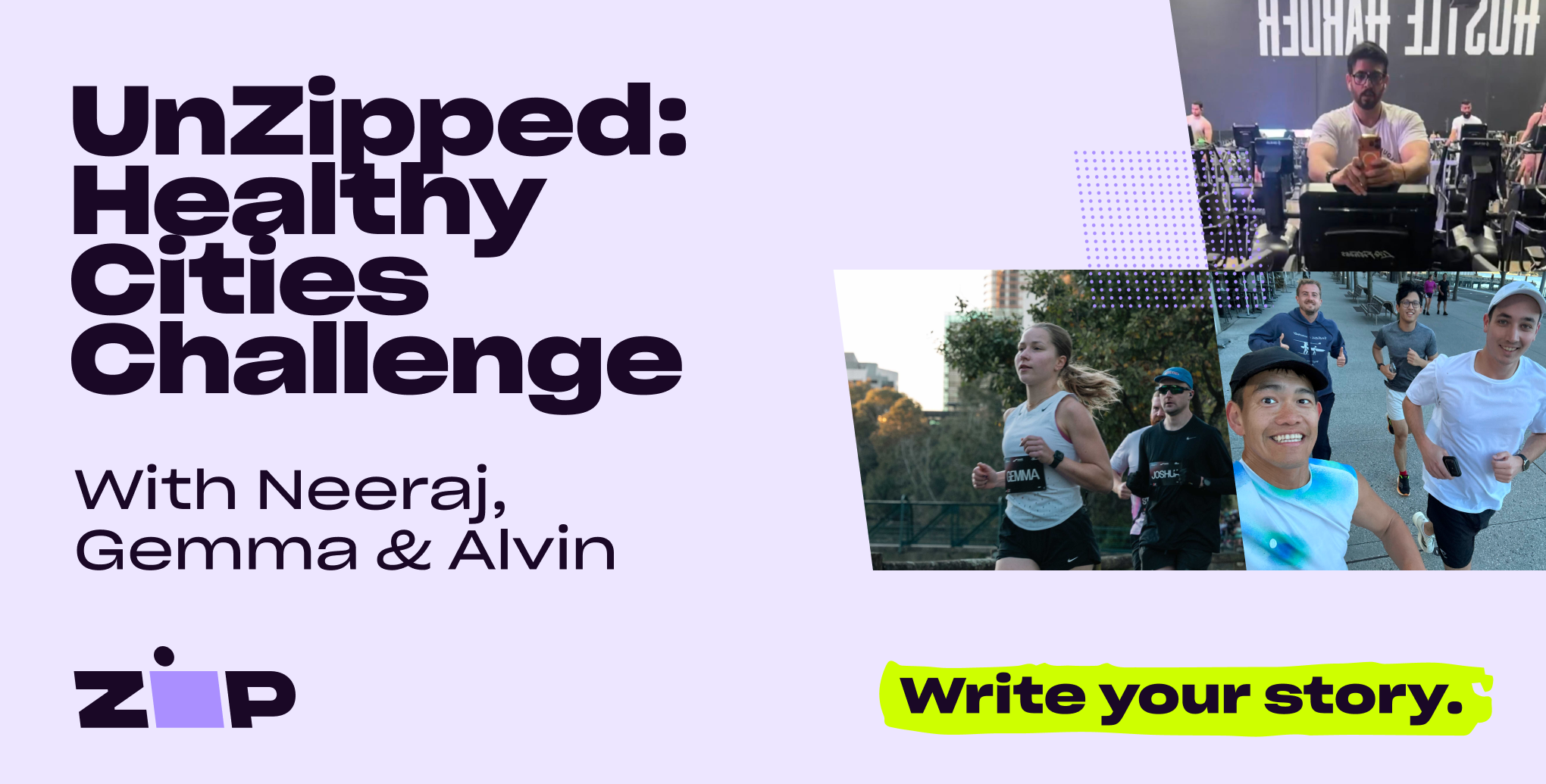
UnZipped: Healthy Cities Challenge
Author: Multiple Contributors
Three AU-based Zipsters reflect on memorable moments from the 2026 BUPA Healthy Cities Challenge.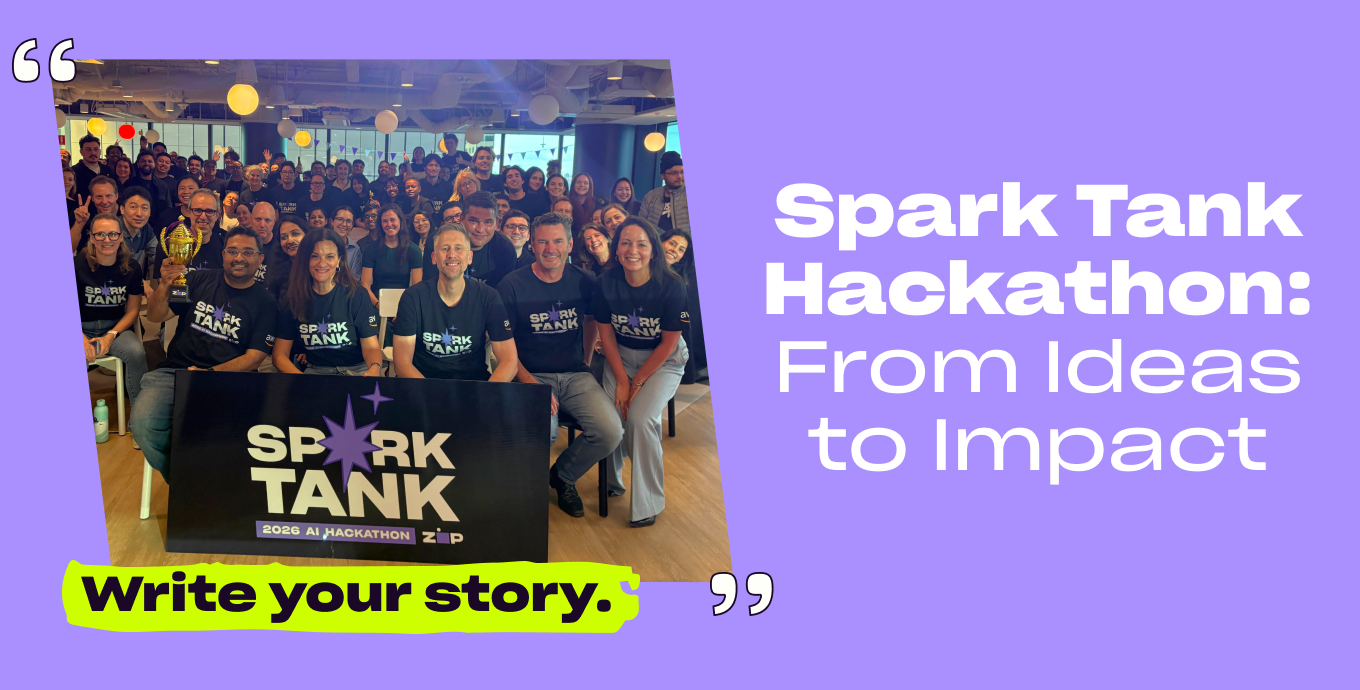
Oct 14, 2026
Life at Zip
Spark Tank Hackathon: From Ideas to Impact
Author: Multiple Contributors
Three Zipsters from across our AU business reflect on Spark Tank, our recent AI-themed Hackathon and Learning Experience.
Sep 27, 2026
Technology
AI in action with Team CX (US)
Author: Jag Seth
Hear from US VP Customer Experience Jag Seth on how AI is re-shaping how our teams service customers.


